

MATS MagLev Magnetic Levitation Lunar Transport System
Advantages of a MagLev transport system on the lunar surface
Extremely low rolling resistance and high efficiency
Magnetic levitation eliminates wheel-to-rail contact and greatly reduces mechanical friction. On the Moon, where energy supply and mass are at a premium, higher vehicle energy efficiency lowers operational power requirements and reduces propellant or power-generation mass for the infrastructure.
MagLev enables sustained transit speeds along long, straight corridors without abrasion wear. Lower mechanical wear translates into reduced spare parts mass, fewer maintenance interventions, and fewer EVA or robotic servicing operations in a high-risk environment.
Precision, repeatability, and operational reliability
Electromagnetic guidance provides precise control of vehicle position and velocity. Predictable, repeatable transit times improve scheduling for cargo and crew transfers between habitats, launch/landing sites, resource-processing plants, and power stations.
Reduced dust disturbance and contamination
Lunar regolith is highly abrasive and electrostatically sticky. Contactless levitation and non-wheeled systems minimize dust kicked into the environment, reducing abrasion of equipment, seals, and optical degradation, and contamination risks to habitats and sensitive instrumentation.
Safety and controlled environments
When used for astronaut transport, vehicles can be pressurized, enabling sheltered crew transport without relying on full spacesuits. Emergency braking and automated control systems can be engineered for high redundancy.
Scalability for high-throughput logistics
A modular MagLev trunk line supports high-frequency, high-capacity movement of bulk cargo (ore, regolith, fuels), manufactured components, and waste, enabling economies of scale for in-situ resource utilization (ISRU) and large-construction projects (habitats, radiators, solar arrays).
Integration with in-situ resource utilization and anchor infrastructure
Fixed guideways serve as structural spines for power distribution (superconducting lines, integrated solar arrays), communication relays, and thermal management. They can host power/propellant transfer points and ISRU nodes—creating a transportation + utility backbone that leverages local resources.
Reduced launch and ascent requirements
By providing reliable surface transfer to optimized launch/landing pads, MagLev lowers the need for individual ascent vehicles to make long cross-site journeys, enabling lighter vehicles and reducing propellant mass per payload to lunar orbit or Earth return.
Energy-regenerative operation potential
Electromagnetic systems can recover braking energy and return it to the grid or storage systems, improving overall energy efficiency—particularly valuable when power is constrained by local generation/storage limits and solar array shadowing.
Long service life and material efficiency
With fewer moving mechanical parts and reduced abrasive wear, the system's lifetime can be longer than that of conventional rovers and rails. Components can be designed for repairability and modular replacement using in-situ manufactured parts, reducing resupply from Earth.
Enabling large-scale habitation and industrialization
Reliable, high-capacity transport is essential for industrial-scale activities—mining, manufacturing, construction—by reducing logistics costs and increasing cadence. MagLev corridors help make distributed lunar settlements and multi-site industrial campuses practical.
Predictable thermal and electromagnetic management
Fixed infrastructure can incorporate thermal radiators, superconductors, and shielding tailored to the local thermal cycles and radiation environment, improving performance consistency compared with ad hoc vehicle-based transport.
A lunar MagLev transport network offers high efficiency, low maintenance, precision, dust mitigation, safety, and scalability—providing a robust logistics spine for crewed bases, ISRU, industry, and launch/landing operations. Its integration potential with power, communications, and resource-processing infrastructure makes it a strong enabling technology for sustained lunar presence and economic activity.
Our Team
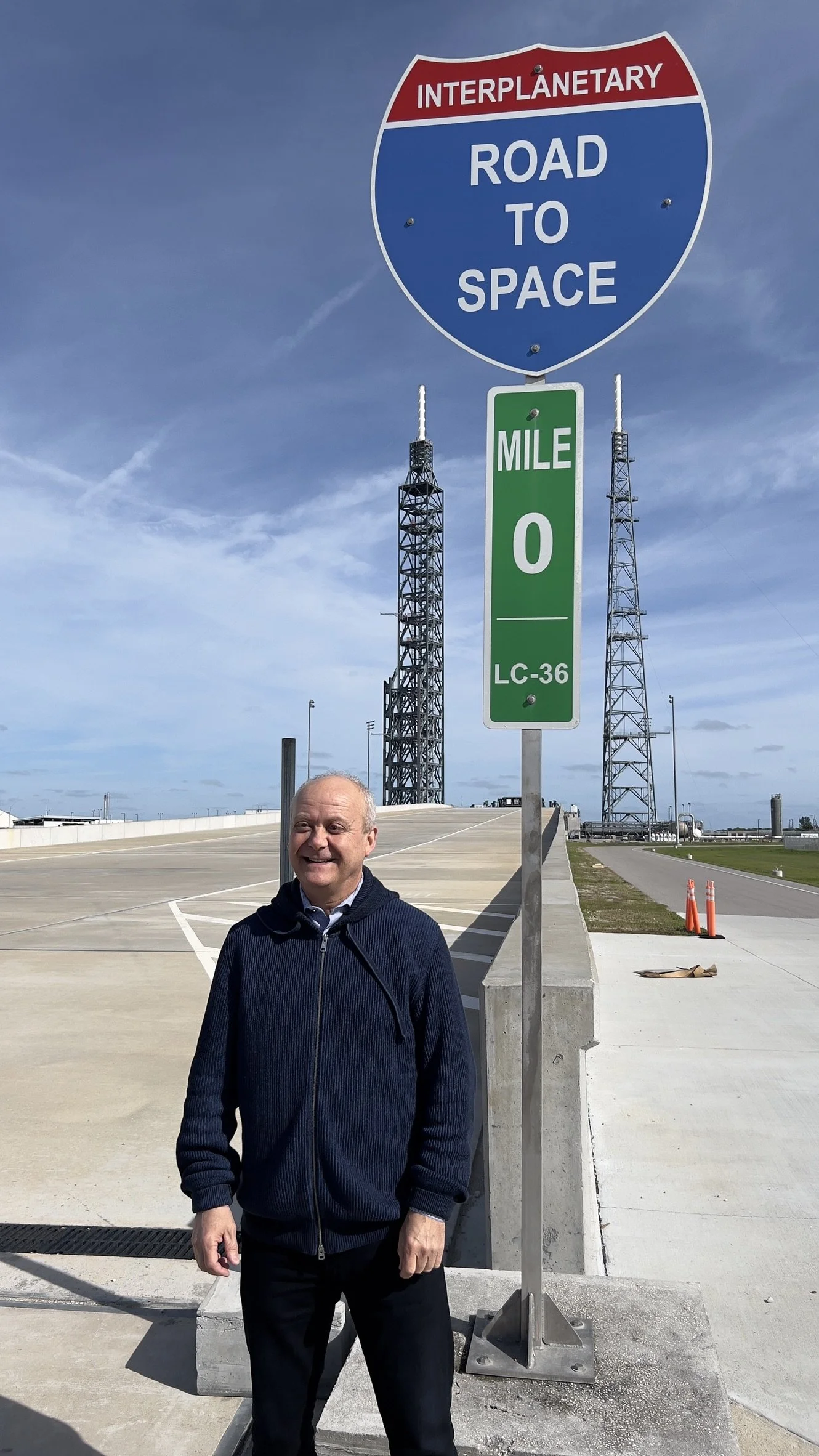
Martin Meinshausen
FounderEnthusiastic about space mining, leveraging terrestrial mining experience to enhance the lunar economy. Master's degree in Mining Engineering from Technische Universität Berlin, Germany, and a Master of Global Management from ASU Thunderbird, Phoenix, AZ
Contract Manager